
Last updated October 30, 2026
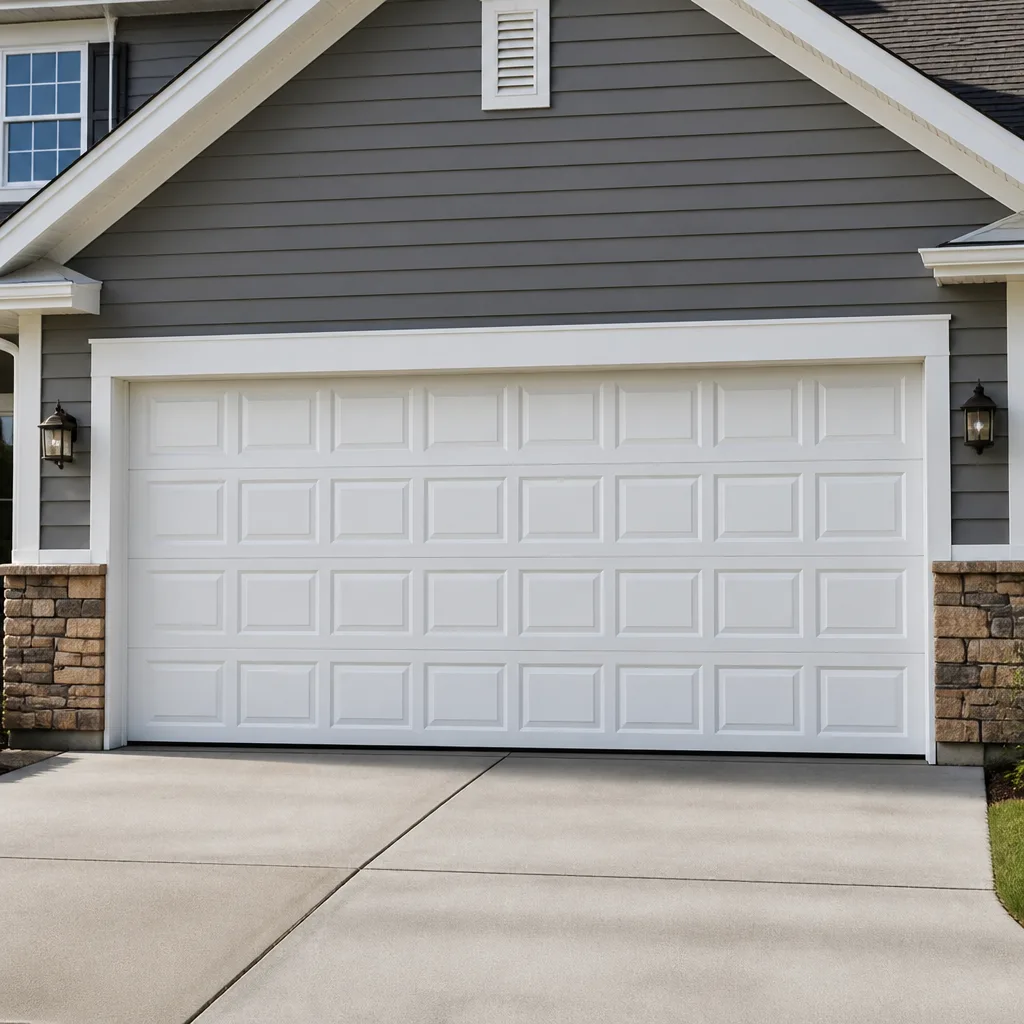 Raised-panel steel
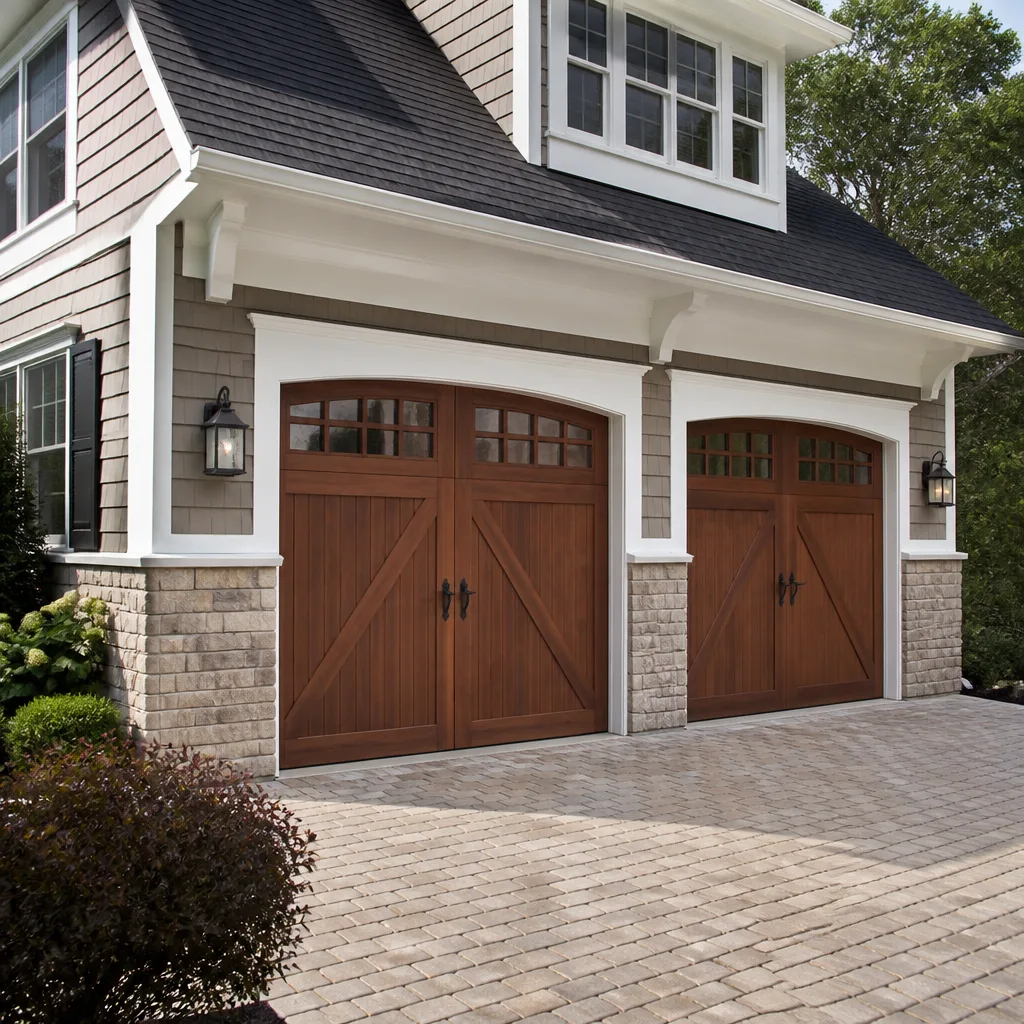 Carriage house
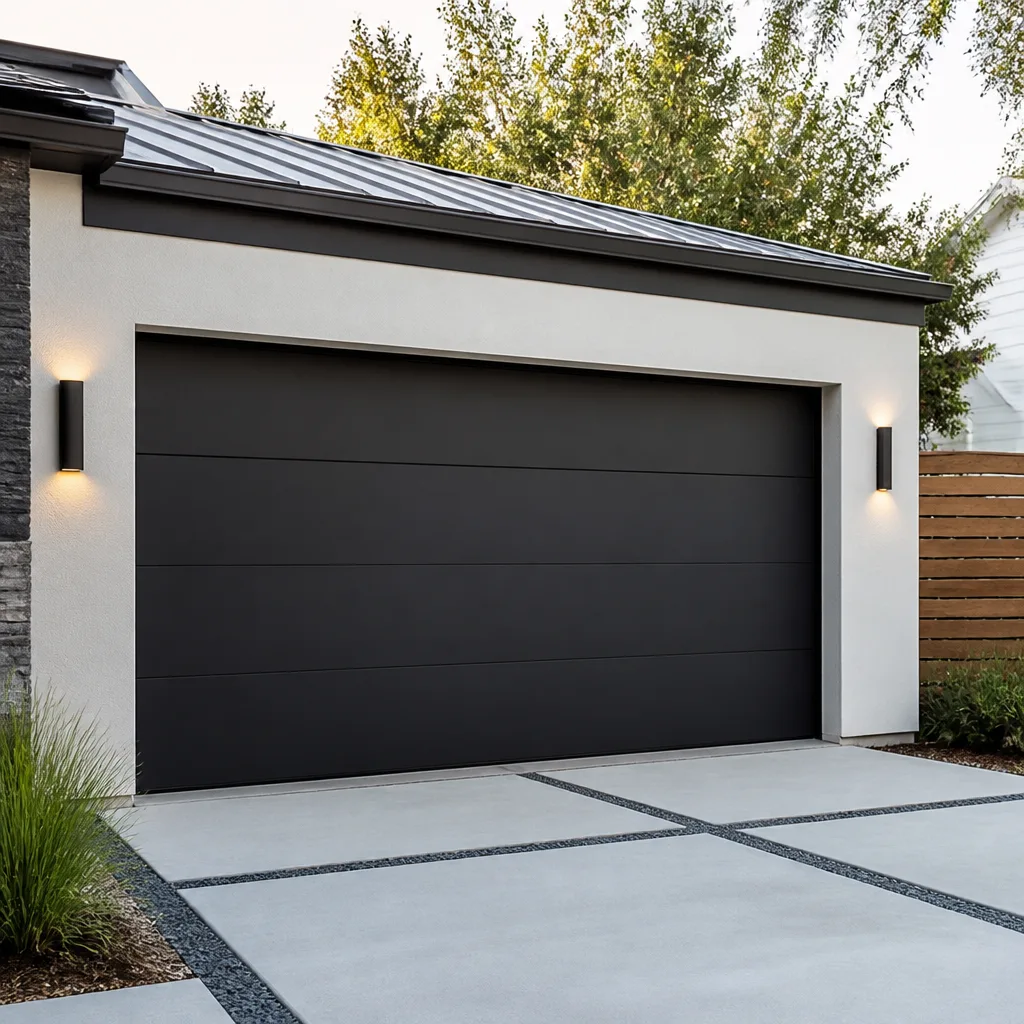 Modern flush
 Full-view glass
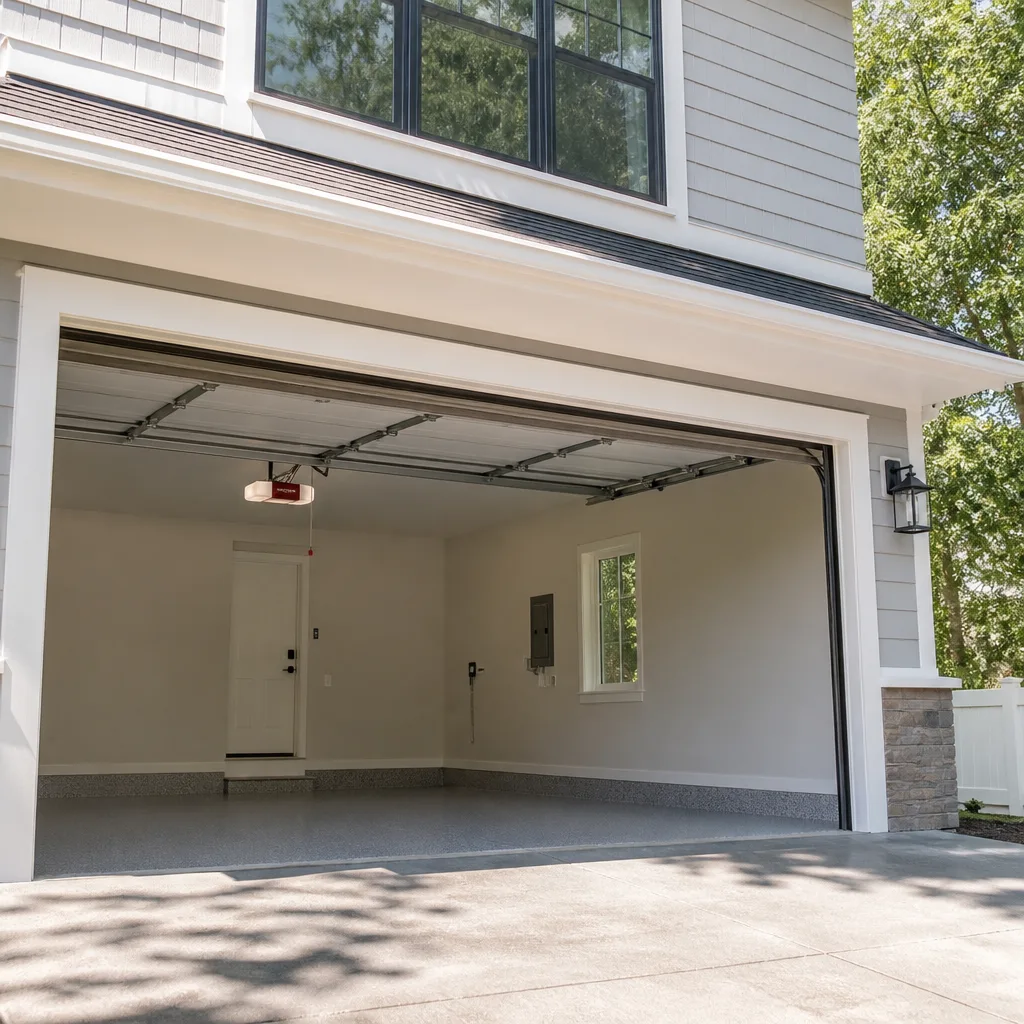 LiftMaster openers
 Chamberlain openers
Full 25-point door and opener safety check with every visit - springs, cables, rollers, tracks, and your LiftMaster or Chamberlain opener included
You get a price before we start. It does not change when the truck arrives.
Get your free estimateGarage Door Warning Signs: A Oceanside Homeowner’s Reference Guide
Your garage door is the largest moving object in your home. On a typical Oceanside week, it cycles open and closed anywhere from 20 to 40 times, which adds up to over a thousand operations a year. Every one of those cycles sends signals about the health of the springs, cables, rollers, and opener. Most homeowners don’t listen. A door that takes two extra seconds to open, a faint grinding sound, a slight lean to one side – these get filed under “it’s always done that.” Then a spring snaps at 7 a.m. on a workday and the door becomes a 300-pound barrier. This guide teaches you to read the warning signs before that happens.
Quick Answer
The most common garage door warning signs in Oceanside include unusual sounds during operation (grinding, squealing, popping), visible asymmetry or gaps between the door and frame, slow or jerky movement, an opener that reverses without obstruction, and rust or mineral deposits on coastal hardware. A garage door that makes a new sound, moves differently, or looks uneven is telling you something specific – and addressing it early costs a fraction of an emergency repair.
Styles & brands we work with
Table of Contents
- The Seven Sounds Your Garage Door Makes and What Each One Means
- The Visual Asymmetry Test: Reading a Door That’s About to Break
- Response Time Changes: What Slower, Louder, or Reversing Actually Means
- Coastal-Specific Warning Signs: What Salt Air Does to Garage Doors in Oceanside
- The Last Service Timeline: Estimating Urgency From Component Age
- Structural Symptoms: Gaps, Light, and the Tell-Tale Lean
- Opener-Specific Warning Signs: When the Motor Is the Problem
- Common Mistakes to Avoid
- When to Call a Professional
- Frequently Asked Questions
The Seven Sounds Your Garage Door Makes and What Each One Means
Doors talk. The sounds they make during operation are the most reliable diagnostic tool you have, and each one points to a different component. Here’s what a garage door specialist listens for when a Oceanside homeowner describes a noise over the phone. We cover the full range of door makes – from Raynor to Clopay to Amarr – and the sound profile is generally consistent across brands because the mechanical systems work the same way, though choosing the right garage door brand still matters for Oceanside homeowners.
Grinding
A grinding sound – metal scraping against metal with a rough, continuous quality – almost always points to worn rollers or dry bearings. Garage door rollers contain small ball bearings that should roll smoothly. When those bearings seize, the roller drags along the track instead of spinning. You’ll hear it most clearly when the door passes through the curved section of track near the ceiling. Left alone, a seized roller wears a flat spot into the metal track, and you’re looking at a track replacement on top of the roller work.
Squealing
A high-pitched squeal during door movement usually means the rollers, hinges, or opener chain need lubrication, or the rollers are worn to the point of metal-on-metal contact. In our experience, this is the most ignored sound in Oceanside because it starts subtly and gets worse over months. Homeowners turn up the car radio. The fix is often simple – new rollers or proper lubrication – but ignoring it accelerates wear across the entire system.
Popping
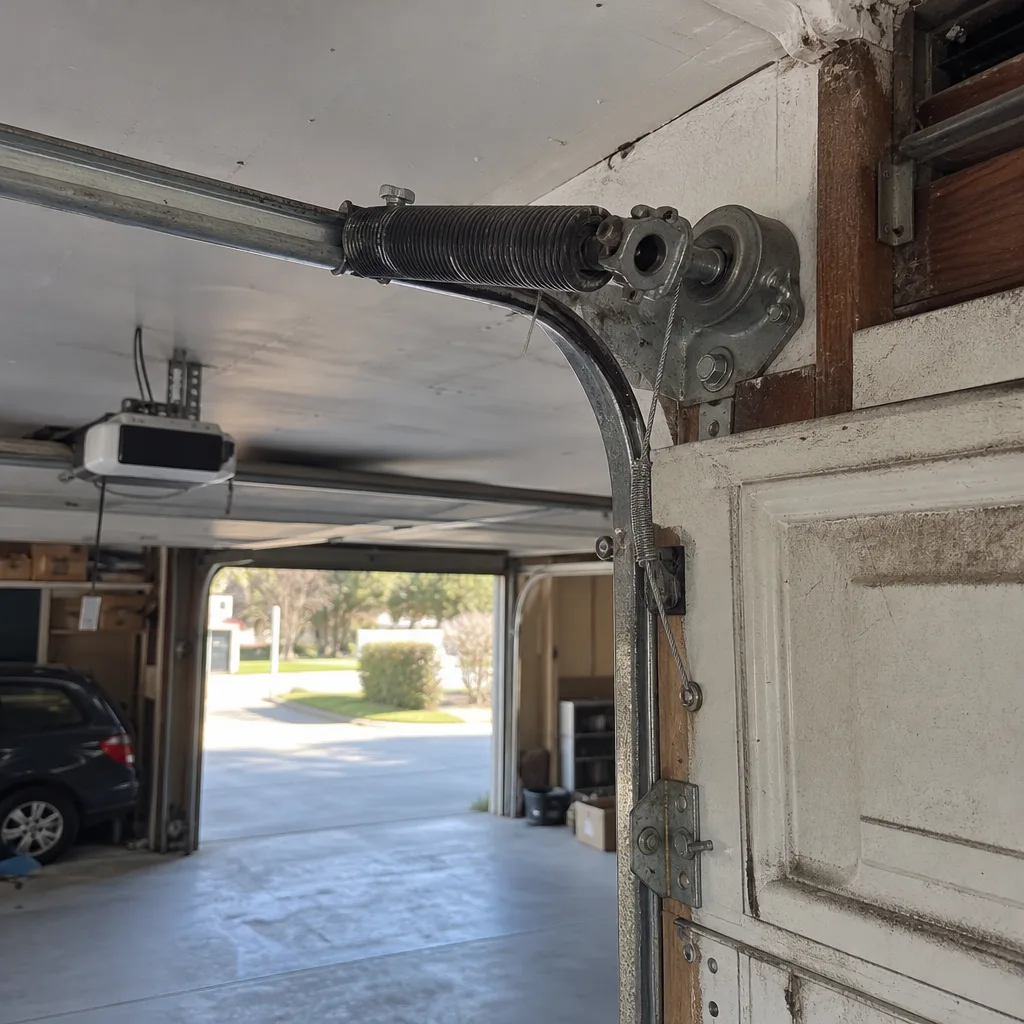
A sharp pop during operation is specific and serious. It’s the sound of a torsion spring losing tension, often the first audible warning before a full spring failure. Torsion springs live above the door and hold a massive amount of stored energy. When you hear a pop, it’s a section of spring coil shifting or a cable momentarily slipping. This is one of the signs we tell Oceanside homeowners never to investigate themselves. The spring is under enough tension to cause serious injury.
Rattling
Rattling usually indicates loose hardware – bolts, nuts, and fasteners have backed out over years of vibration. On a LiftMaster or Genie opener system, rattling can also come from the opener rail becoming loose at the mounts. Walk the track line while the door is closed and check for visible gaps between brackets and the wall. A rattling door is an easy fix if caught early and a track misalignment if not.
Scraping
A continuous scraping sound, especially when paired with visible wear lines or metal shavings on the track, means the door is out of alignment and a section of the door edge is rubbing against the track. This happens when one spring loses tension before the other, pulling the door to one side. The door will often still operate for weeks, which is the danger – every cycle grinds components further.
Thumping
A rhythmic thump-thump-thump as the door travels is the signature of a bent roller or a flat spot on a roller wheel. The bump happens every time the damaged section hits the track. It’s more than an annoyance; that repeated impact stresses the hinges and can bend the track over time.
Humming
If you press the opener button and hear a hum but the door doesn’t move, an opener motor is running against a stuck system. On Chamberlain and LiftMaster openers, this often means a broken spring has dropped the door’s effective weight onto the opener, and the opener is trying to lift a load it was never designed to handle. The hum is the motor straining. Continuing to press the button will burn out the opener on top of the spring repair already needed.
Sound diagnostic summary:
- Grinding: Seized roller bearings or dry track
- Squealing: Worn rollers, dry hinges, or unlubricated chain
- Popping: Torsion spring losing tension – never ignore
- Rattling: Loose hardware or opener rail mounts
- Scraping: Door out of alignment, rubbing track
- Thumping: Bent or flat-spotted roller
- Humming: Opener running against a broken spring or jammed door
If you hear one of these and you’re not sure what it means, you can always call Garage Door Repair in Oceanside for a trained ear.
The Visual Asymmetry Test: Reading a Door That’s About to Break
You can spot a door that’s about to fail from ten feet away without touching anything. Stand outside your garage with the door closed and look at it straight on. A healthy door sits flush and even. A door that’s about to break a cable or snap a spring gives itself away with subtle visual cues. This test takes thirty seconds and catches the most dangerous failures before they happen.
Step 1: Check the gap line at the bottom
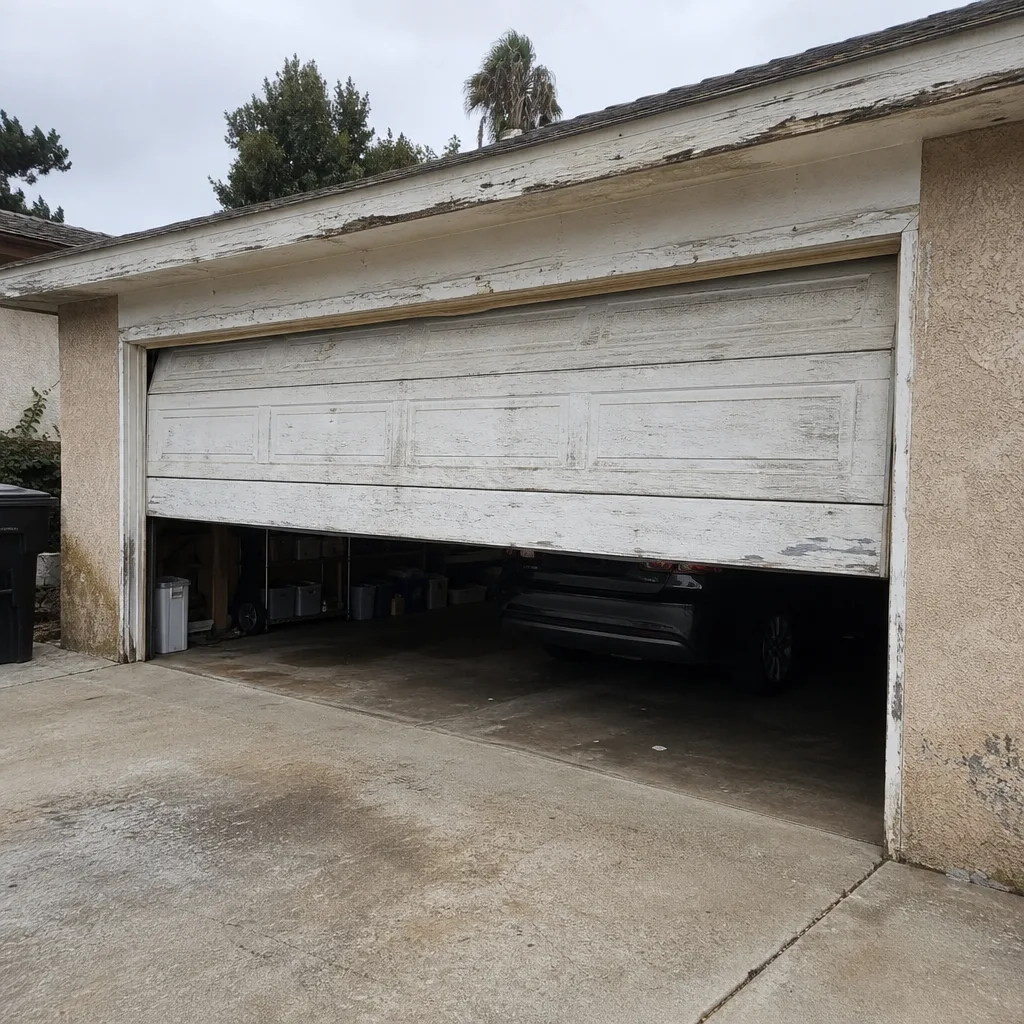
Stand back and look at where the door meets the concrete floor. Is the gap even across the entire width? If the door sits flush on one side and shows a half-inch gap on the other, one spring has lost tension or one cable has stretched. The door is now pulling unevenly. That uneven load is transferred to the remaining spring and cable, which accelerates their failure.
Step 2: Look at the vertical seams between panels
Each horizontal panel seam should appear straight and parallel to the ground. If one seam appears to bow slightly – even an eighth of an inch – the panel is under stress from uneven lift forces. In Oceanside, we see this most often on homes within a mile of the coast where rust has weakened a hinge or roller bracket.
Step 3: Compare the cable tension at both sides
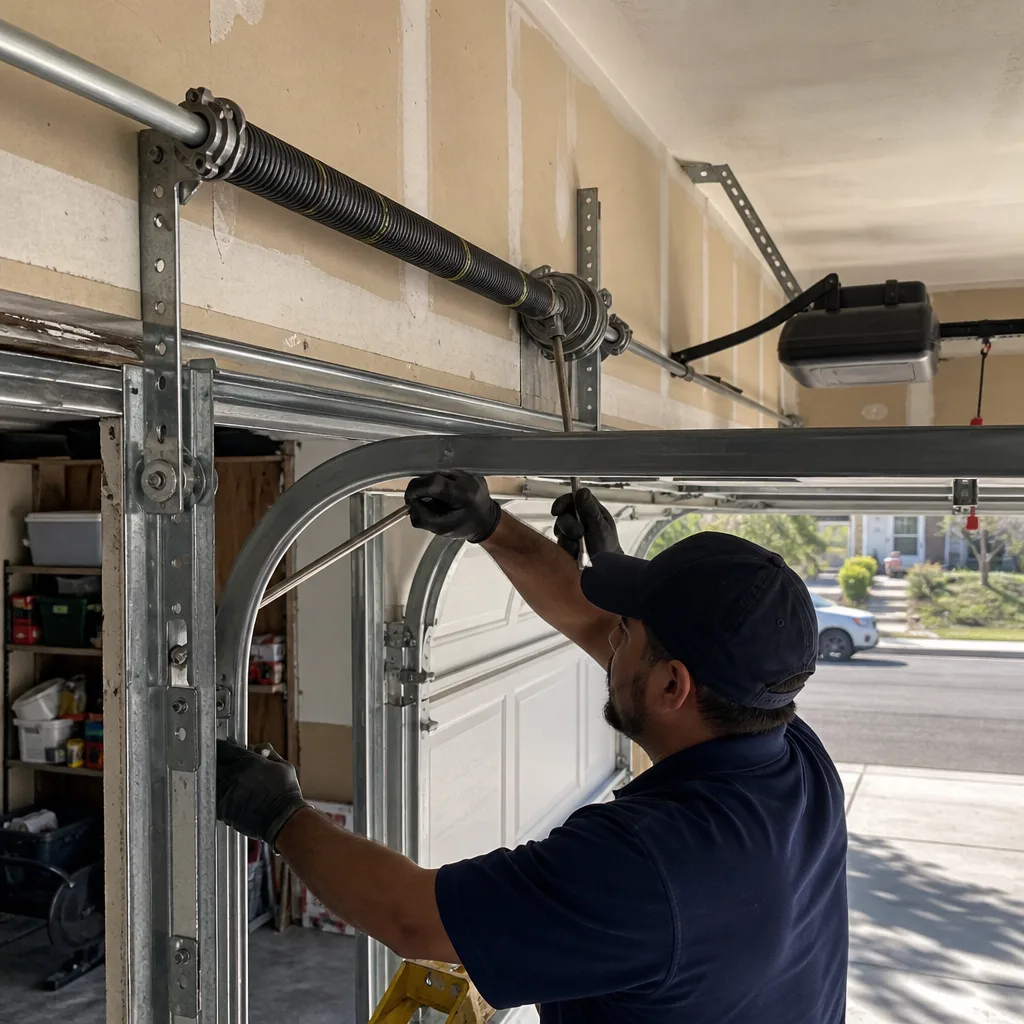
Look at the cables running along each side of the door track. They should both be taut. A cable that looks slightly looser than its counterpart – or that shows a few separated strands near the bottom drum – is about to fail. A frayed cable under load releases with enough force to cut through drywall and can seriously injure anyone standing nearby. If you see this, have it addressed before using the door again.
Step 4: Look at the door edge inside the garage
Open the door fully during daylight and look at the underside where the door panels rest along the track. Uneven wear marks, exposed metal at panel edges, or a gap between the door and track at any point means the door has shifted in its travel. This is a track alignment issue that will only worsen with continued use.
What the asymmetry test catches
- Worn torsion springs losing tension unevenly
- Frayed cables about to fail
- Bent track sections developing under uneven loads
- Stretched hinges allowing panels to separate
- Roller brackets working loose from the door frame
Homeowners who run this check every few months catch most mechanical failures in their earliest, least expensive stage, as detailed in our seasonal garage door care guide for Oceanside. It’s the single highest-value habit in this entire guide, and we recommend it for every Clopay, Amarr, and Wayne Dalton door in Oceanside, regardless of age.
Response Time Changes: What Slower, Louder, or Reversing Actually Means
Your opener’s behavior is a diagnostic readout. When the response changes – slower starts, longer travel times, hesitation at the bottom, reversing midway – the opener is telling you it’s working harder than it should be. These changes are rarely “normal aging.” They’re usually an early-stage mechanical issue or an opener being asked to compensate for a failing component.
A door that opens more slowly than it did six months ago
A garage door that takes two seconds longer to open than it did six months ago is not telling you it’s “getting old.” That lag means the springs are losing tension and the opener is bearing more of the door’s weight. A spring-assisted door should be nearly weightless to lift manually. When the springs wear, the opener motor works harder, moves slower, and runs hotter. Catch this stage and you’re replacing springs. Miss it and you’re replacing springs plus an opener motor that burned out doing double duty.
A door that hesitates or stutters at the bottom of travel
Hesitation at the bottom is usually the opener’s force-margin system engaging – it detects resistance and pauses. The cause is often a track obstruction, a misaligned sensor, or a door that has shifted slightly out of plumb. On Genie and Chamberlain openers, this hesitation reads as a brief pause before the door starts upward. It’s the opener saying, “something is harder to lift than expected.”
A door that reverses without visible obstruction
The most common phone call we get in Oceanside goes something like this: “The door starts to close, then reverses back up and the lights flash.” The homeowner assumes a sensor is misaligned. But a door that reverses while closing – or stops and reverses during opening – is often responding to a real, if invisible, resistance: a spring losing tension, a cable binding on the drum, or a track section that has shifted. The safety reversing system is doing its job. It’s detecting a load irregularity. The right response is diagnosis, not adjusting the sensor and hoping.
A noisier opener than it used to be
Opener noise increases when the door balance degrades. The motor strains, the drive belt or chain picks up vibration, and the whole rail transmits that vibration into the ceiling. An opener that used to run quietly and now sounds labored is the same story: the door’s balance has changed, and the opener is compensating. This is the moment to call Garage Door Opener Repair in Oceanside before the compensation becomes a failure.
What “normal” sounds like
A correctly balanced door with healthy springs and a properly installed opener makes a smooth, consistent hum and moves at an even pace from fully closed to fully open. Any deviation from that baseline – speed, sound, or smoothness – is a diagnostic data point. Write down what changes you notice and when. That timeline helps a technician pinpoint the cause faster than any tool.
Coastal-Specific Warning Signs: What Salt Air Does to Garage Doors in Oceanside
Oceanside sits directly on the Pacific. That’s a gift for the people who live here and a challenge for every piece of metal on a home. Garage doors within a mile or two of the coast operate in salt-laden air, and the symptoms of corrosion are specific and predictable. They show up earlier than they do inland, and they look different. Recognizing them saves you from replacing a door that could have been repaired.
White mineral deposits on springs, rollers, and hardware
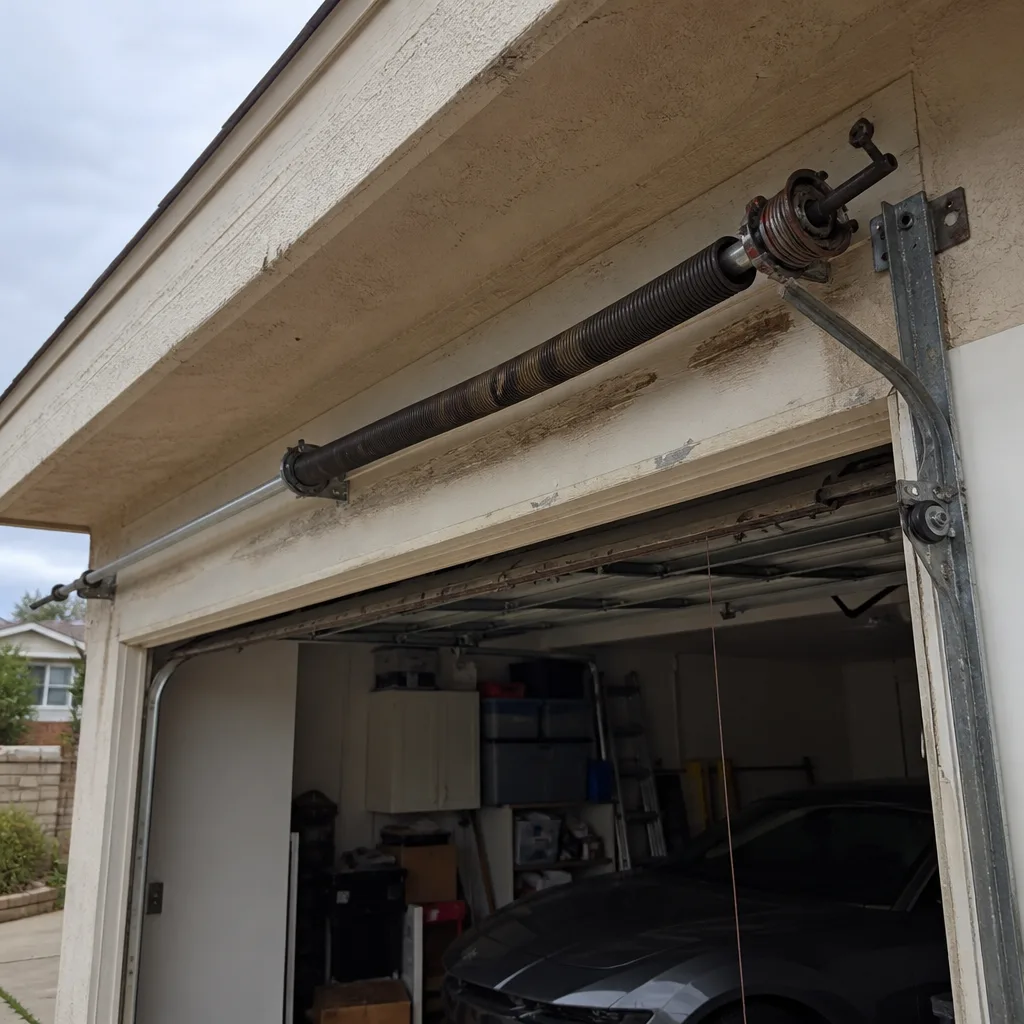
That white, chalky film on your springs and hinges is salt and mineral residue. It’s the first stage of a corrosion cycle that weakens metal over time. Springs under tension are especially vulnerable – corrosion creates microscopic pits in the metal that become stress points. A corroded spring snaps earlier than a clean one, sometimes with no warning pop. If you see white deposits on any load-bearing hardware, the clock is running.
Bubbling paint or rust spots on steel panels
Steel garage doors are coated, but coastal salt air finds its way in. Bubbling paint on the lower panel is water intrusion beginning to rust the steel beneath. On a Wayne Dalton or Raynor steel door, this usually starts at the bottom corner, where rain splash meets the panel edge. It won’t stay cosmetic. Rust spreads laterally under the paint and weakens the panel’s connection points at the hinges.
Stiff operation after foggy mornings
Oceanside fog settles in dense, damp layers. Metal parts – hinges, rollers, tracks – pick up that moisture, and salt deposits attract more. A door that feels stiff or moves with a dry scrape after a foggy morning is showing you that its moving parts are losing their lubrication and developing surface rust. A door that is regularly stiff in the morning is a door that’s halfway to a seized roller.
Faster wear on bottom seals and weatherstripping
The rubber or vinyl seal at the bottom of the door degrades faster in coastal conditions – sun, salt, and moisture combine to crack and stiffen it. A brittle seal lets in water, sand, and debris, which then accelerates corrosion on the track and bottom panel. Check your bottom seal every six months if you live west of College Boulevard. It’s a twenty-dollar part that protects a four-hundred-dollar track.
What to do about coastal corrosion
- Inspect hardware quarterly: Look for white residue, rust bloom, or flaking metal on springs, cables, hinges, and brackets.
- Lubricate moving parts seasonally: Use a silicone-based garage door lubricant on rollers, hinges, and springs – never WD-40, which strips protective coating.
- Check panel edges for paint bubbling: Treat the first rust spots before they require panel replacement.
- Replace the bottom seal proactively: Don’t wait for visible cracking. If it’s stiff, it’s already failing.
- Schedule a coastal-specific inspection: A specialist who knows the local corrosion patterns can extend the useful life of a door by years.
The salt air isn’t something to fear. It’s something to inspect for. Doors in Oceanside coastal areas need more frequent attention than doors in Vista or San Marcos, and the homeowners who understand that keep their doors running longer and spend less in the long run.
The Last Service Timeline: Estimating Urgency From Component Age
Garage door components have predictable service lives. When you know roughly how long each part lasts – and when it was last changed – you can estimate how urgent a warning sign really is. This section gives you a reference timeline for every major component, based on what we’ve seen across Oceanside’s housing stock.
Component life expectancy reference table
| Component | Typical Service Life | Coastal Adjustment | Warning Sign That Precedes Failure |
|---|---|---|---|
| Extension springs | 7-9 years | 5-7 years | Stretched coils, uneven door balance |
| Torsion springs | 8-12 years | 6-10 years | Popping sound, door feels heavy manually |
| Rollers (nylon) | 10-15 years | 8-12 years | Grinding, thumping, visible wear marks |
| Rollers (steel) | 5-8 years | 4-6 years | Squealing, flat spots, rust |
| Cables | 5-10 years | 4-8 years | Fraying at drum, loose strands, kinks |
| Hinges | 10-15 years | 8-12 years | Loose door panels, visible gaps at seams |
| Bottom seal | 3-5 years | 2-4 years | Cracking, stiffness, water intrusion |
| Opener motor | 10-15 years | 8-12 years | Sluggish operation, louder travel, reverses |
| Drive belt/chain | 10-12 years | 8-10 years | Slack, chattering, jerky movement |
How to use this timeline
- Establish when each component was last replaced. If you’ve owned the home less than five years and have no records, assume original components from home construction or the last door replacement.
- Compare the component’s age against the typical service life. Anything over 70% of its expected life is in the “monitor closely” window.
- Factor in your distance from the coast. Homes within two miles of the water should use the coastal adjustment column. The salt load genuinely shortens metal component life.
- Check for the listed warning sign. If you’re in the service life window and seeing the corresponding warning, the component is not just aging – it’s failing.
- Act based on risk level: Springs and cables carry high injury risk when they fail; rollers and hinges carry moderate damage risk; seals and weatherstripping carry low risk but cause secondary damage when neglected.
In our experience, Oceanside homeowners who keep even a rough mental timeline of component age catch issues at the repair stage. Homeowners who don’t catch them at the emergency stage. The difference in price is substantial – a spring replacement is a fraction of the cost of a dropped door, a damaged panel, and a broken opener.
Structural Symptoms: Gaps, Light, and the Tell-Tale Lean
Some warning signs are silent. The door doesn’t sound different and the opener doesn’t behave differently, but the geometry of the door has changed. These structural symptoms are the ones most commonly missed until a failure occurs, because they develop so gradually.
Light leaking around the door edges
Stand inside the closed garage and look around the perimeter of the door. Light entering in a uniform line along the top and sides is normal – the weatherstripping lets a little through. But light entering unevenly, or visible in bands that don’t exist on the other side, means the door has shifted. The track holds the door square; when a gap appears on one side only, the track has moved or the door has warped.
The tell-tale lean
Look at the door from across the street. A door that leans slightly to one side when viewed from a direct angle is a door with uneven spring tension or a failing cable. The lean might be an inch over the door’s seven-foot height, which reads as nothing from close up – but it’s the door’s center of gravity shifting. A leaning door is a door that is about to put enormous lateral strain on its tracks, and that’s often the moment a cable lets go.
Gaps between panels
Run your eye along the horizontal seams between the panels. Gaps that are wider at one end than the other – or gaps that have appeared where panels used to meet flush – indicate hinge wear, panel warping, or uneven load distribution. This is particularly common on older wooden doors and on steel doors that have been struck by a vehicle at some point. Every gap is a place where the door’s structural integrity is compromised.
Tracks that bow at the midpoint
Open the door halfway and look at the vertical track on each side. A track should be perfectly straight. A bowing track, even a slight one, means the door is pushing outward as it travels, usually because the door is out of balance. The track is trying to guide a door that’s fighting against it.
What structural symptoms tell you
- Uneven spring tension is pulling the door off center
- A stretched or fraying cable is reaching the end of its ability to bear load
- Hinge wear is allowing panels to separate
- Track misalignment is the door being pushed out of its intended path
Structural symptoms are the system-wide result of one or more components failing. They won’t reverse themselves. If you see any of these, treat the door as unreliable until a specialist has looked at it. Pay attention to what your door’s structure is showing you, and you’ll rarely be surprised by a sudden failure. For a deeper look at how we assess full door health, see the Canyon Garage Door Repair home page.
Opener-Specific Warning Signs: When the Motor Is the Problem
Sometimes the door itself is fine and the opener is the failing component. Openers – the motor, drive system, logic board, and remote communication – have their own distinct warning signs. Modern openers from LiftMaster, Chamberlain, and Genie embed electronics that are more sensitive than the mechanical door itself.
The door moves smoothly but the opener shuts down mid-cycle
If the door appears to travel fine but the opener stops partway through and the lights flash, the motor’s thermal protection is tripping. This is not a door problem – it’s the opener overheating, often due to failing capacitors or a tired motor being asked to work at the edge of its capacity. The overheating gets worse over time and the travel distance before shutdown gets shorter.
Remote range shrinks dramatically
A healthy opener remote works from the end of the driveway. If you now need to be in the driveway and pointing the remote at the garage, something has changed. It could be the remote battery, but if a fresh battery doesn’t fix it, the opener’s receiver is failing. When the receiver board degrades, range shrinks. This is a known failure pattern on older openers.
The opener runs, but with a delayed start
A pause between pressing the button and the opener starting – longer than one second – indicates the opener’s start capacitor or the motor’s bearings are wearing. It’s a small delay at first. It turns into a longer delay and then the motor fails to start at all. Replacing the capacitor is often possible and inexpensive relative to a full opener replacement.
Rolling code keypads and smart features fail
Garage openers today include rolling code encryption and, increasingly, Wi-Fi and smart-home integration. If your wall-mounted keypad stops accepting codes or your phone app can’t reach the opener, the logic board may be failing. Logic board failures are also sometimes misdiagnosed as remote problems. The opener experts at Canyon Garage Door Repair see this pattern regularly – the mechanical side is fine, and the electronic brain is the problem. For help finding qualified help, see how to hire a garage door contractor in Oceanside.
What’s worth repairing vs. replacing
- Repairable: Capacitor failure, remote and receiver issues, misaligned safety sensors, drive chain/belt slack, some logic board repairs
- Replacement territory: Burned-out motor, multiple simultaneous electronic failures, openers older than 15 years with recurring issues, openers that have been through repeated spring failures
The decision comes down to the condition of the other components. An opener motor with a failed capacitor and a healthy door is a repair. An opener that has been compensating for broken springs for months and now struggles to lift is a replacement. Genuine diagnosis means looking at the whole system, not just the part that broke. For opener-specific issues, see Garage Door Opener Repair in Oceanside.
Common Mistakes to Avoid
- Ignoring a new sound because the door still works. The door will keep working right up until it doesn’t. Every new sound is a component in an earlier stage of failure than it will be next month.
- Lubricating a popping spring. Popping is not a lubrication issue. Lubrication won’t fix a failing torsion spring, and approaching the spring to lubricate it puts you within range of a part that can release violently.
- Continuing to operate a door that reverses on its own. The safety reversing system is doing exactly what it’s designed to do. Overriding it or adding force to push through the reversal turns a diagnostic signal into a potential injury.
- Using WD-40 on garage door components. WD-40 is a penetrant and degreaser, not a garage door lubricant. It strips away protective coatings and leaves metal parts more vulnerable to the coastal air in Oceanside.
- Waiting until a spring breaks to call a specialist. A broken spring means the door is now a dead load. You’re calling from an emergency instead of calling from a routine repair window, and the total cost is higher.
- Assuming old doors are just naturally slower. A properly balanced door, even one twenty years old, moves at a consistent speed. Slowness is a symptom, not a feature of age.
When to Call a Professional
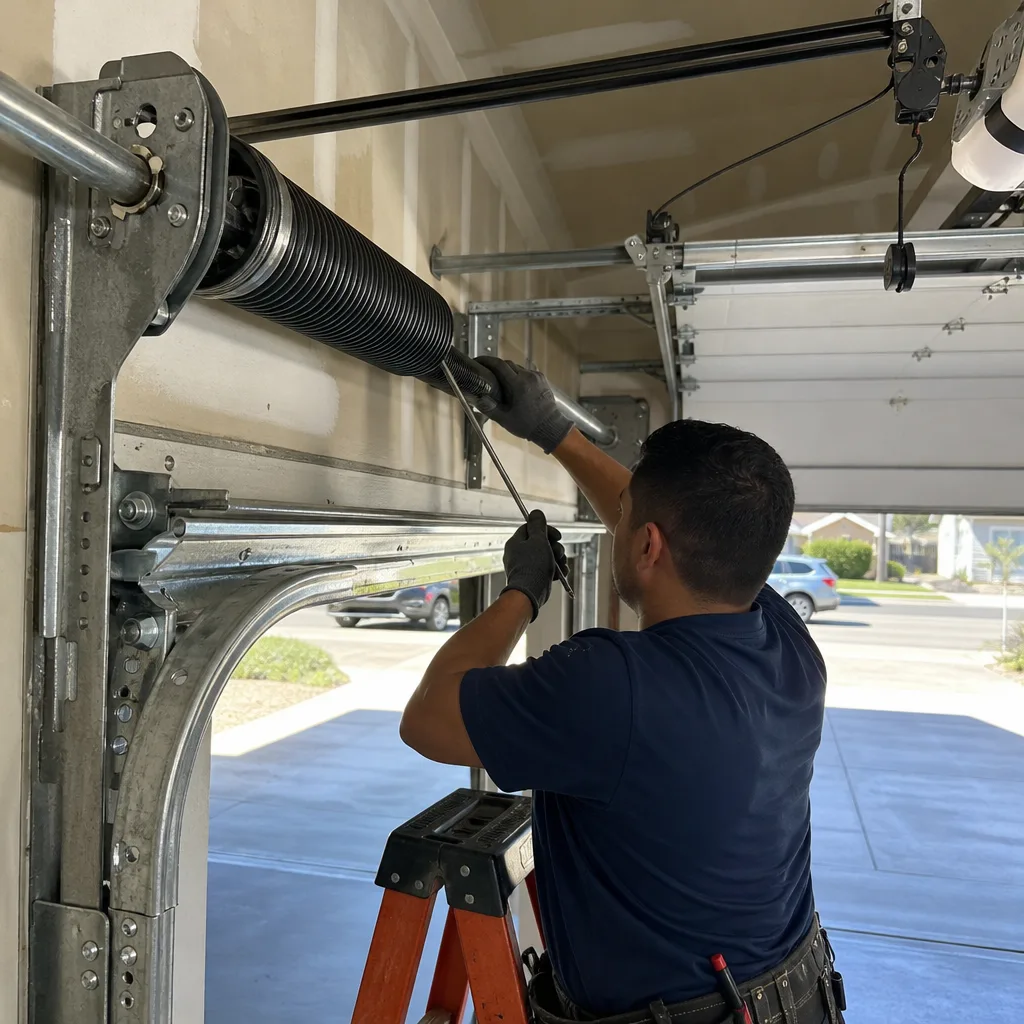
Many garage door issues are safe to inspect visually but not safe to fix yourself. High-tension springs under load, cables connected to those springs, and anything involving the track’s structural alignment should be handled by someone who does this work every day. The energy in a garage door spring is enough to cause severe injury. If you’ve seen a popping spring, a frayed cable, an uneven door, or an opener that’s been laboring against a failing spring, stop using the door and make the call. Canyon Garage Door Repair offers free estimates in Oceanside – call (844) 295-2241. We’ll diagnose the real problem and quote the repair before any work begins.
Frequently Asked Questions
Spring replacement in Oceanside typically ranges from $200 to $380 for a standard torsion spring pair on a residential door. The final price depends on the door’s weight, spring size, and whether the work is an emergency call. At Canyon Garage Door Repair, we quote the exact price before any work starts – no surprises on the invoice. Call (844) 295-2241 for a free estimate.
Yes, most mechanical repairs – broken springs, snapped cables, stuck doors – can be completed the same day when parts are available. Our trucks stock common spring sizes, rollers, hinges, and cable assemblies so we can resolve most issues on the first visit. For planning or full Garage Door Installation in Oceanside, we schedule a measure and provide a written price.
A loud bang or pop during opening usually means a torsion spring has broken or is actively losing tension. Springs are under high tension, and the failure releases energy suddenly when it happens. Stop using the door and call a specialist – continuing to operate it can damage the opener and put you at risk of the door falling.
Slowing down means the door’s balance is changing – the springs are losing tension and passing more weight to the opener. That extra load slows the motor and shortens its life. The fix is spring replacement or adjustment, not a new opener. Address the balance issue and the speed returns.
Yes. Coastal salt air accelerates corrosion on springs, cables, hinges, and steel panels, especially within two miles of the water. Hardware that would last 10 years inland often lasts 5 to 7 years here without maintenance. Quarterly hardware inspection and seasonal lubrication are the best defense against coastal corrosion.
We recommend an annual inspection and lubrication for most homes, with quarterly visual checks if you live within two miles of the coast. The annual service should include spring tension check, cable inspection, roller and hinge inspection, and opener force-margin testing. Most homeowners who follow this schedule avoid surprise failures.
The Bottom Line
Every garage door failure gives warnings. The sounds it makes, the way it moves, the visual asymmetry, the corrosion patterns, the change in opener behavior – these are all readable signals. The door that takes two seconds longer to open is telling you its springs are tired. The door that pops when it opens is telling you a spring is about to let go. The white film on the hardware is telling you the salt air is winning. In Oceanside, where coastal conditions accelerate every problem, reading these signs early is the difference between a manageable repair and a full door replacement. Learn the signals, run the checks, and when something’s off, call a specialist who diagnoses by component – not by guess. Canyon Garage Door Repair works on all major brands, including Raynor, LiftMaster, Chamberlain, and Genie, and we’re happy to take your call at (844) 295-2241.
Written by the team at Canyon Garage Door Repair, serving Oceanside since 2017.
See the difference
 Before
 After
 Before
 After
 Before
 After